Resources
The complete guide to one-way video interviews
One-way video interviews are changing how companies screen candidates at scale. This guide covers everything you need to know — from the basics to best practices — whether you're a recruiter exploring the format or a candidate preparing for one.
What is a one-way video interview?
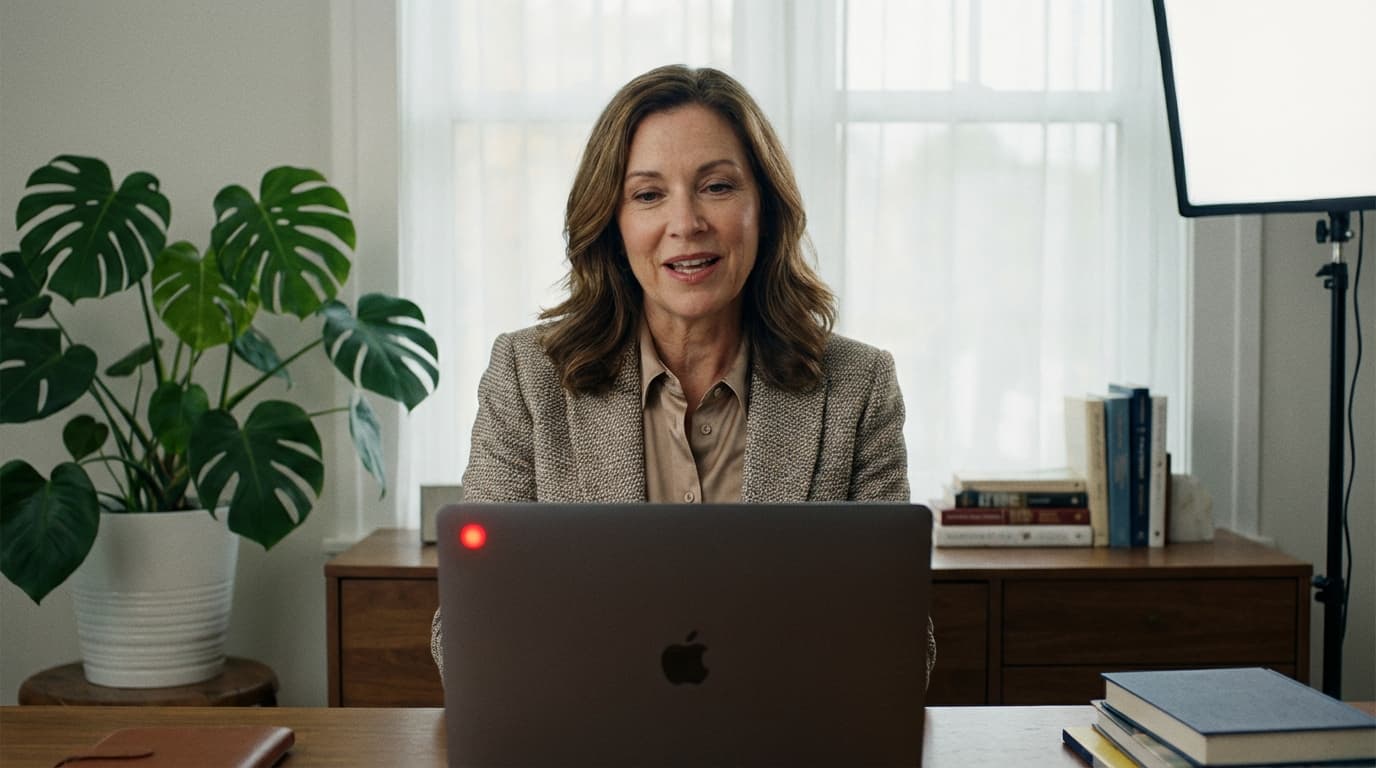
A one-way video interview (also called an asynchronous or on-demand video interview) is a screening method where candidates record video responses to a set of pre-defined questions. Unlike a live interview, there is no interviewer present during recording. The candidate sees a question, records their answer, and moves on to the next one.
The hiring team reviews the recordings later, on their own schedule. This decouples the interview from a specific time slot, eliminating the scheduling overhead that makes phone screens so time-consuming.
The format has grown rapidly in recent years, with companies of all sizes adopting it to screen high-volume roles, remote positions, and early-stage candidates before committing to live interviews.
Benefits for recruiters
Dramatic time savings
A 30-minute phone screen with 40 candidates takes 20 hours of recruiter time — plus scheduling overhead. With one-way video, you send one invite link and review responses at your own pace, often at 1.5x or 2x speed. Most teams report cutting screening time by 60-80%.
Consistent evaluation
Every candidate answers the same questions in the same format. This removes the variability of live conversations where different interviewers may ask different questions or probe different areas. Structured evaluation leads to fairer, more defensible hiring decisions.
Scale without adding headcount
Whether you have 20 candidates or 200, the setup work is the same: create the interview, send the link. The only variable is review time, which scales linearly rather than exponentially. This makes high-volume roles manageable for small teams.
Better collaboration
Hiring managers can watch candidate responses directly instead of relying on recruiter notes. Multiple team members can review and rate independently, reducing bias and improving decision quality.
Benefits for candidates
Record on your own schedule
No need to take time off work or rearrange your day around a phone call. Candidates can record their responses in the evening, on weekends, or whenever they feel most prepared. This is especially valuable for people in different time zones or with demanding schedules.
Less pressure, more authentic responses
Many candidates find live phone screens stressful, particularly when caught off guard by unexpected questions. One-way interviews give candidates preparation time before each question and the option to re-record answers. The result is a more accurate representation of the candidate.
Equal opportunity to shine
Every candidate gets the same questions and the same amount of time. There is no advantage to being scheduled first or having a personal connection with the recruiter. The format levels the playing field.
How to set up your first video interview
Getting started is straightforward. Here is a step-by-step process:
- 01
Define your questions
Choose 3-5 questions that map to the key competencies for the role. Keep them specific and clear. Avoid multi-part questions that candidates may only partially answer. Check out our question templates for inspiration.
- 02
Set time limits
Give candidates preparation time (30 seconds to 2 minutes) and a recording limit per question (1-3 minutes is typical). Shorter limits keep responses focused and reduce review time.
- 03
Add a welcome message
A brief introduction sets expectations and makes candidates feel comfortable. Mention the role, how many questions there are, and that they can re-record if needed.
- 04
Send the invite
Share a link via email, your ATS, or any communication channel. Candidates click the link and start immediately — no accounts or app downloads required.
- 05
Review and shortlist
Watch responses, read AI-generated transcripts, and rate candidates. Share a review link with your hiring manager for collaborative evaluation. Move the best candidates to the next stage.
Best practices for questions
Use structured questions — ask every candidate the same questions in the same order. This makes comparison fair and evaluation consistent.
Be specific— instead of "Tell me about yourself", ask "Describe a project where you had to learn a new skill quickly. What was the outcome?"
Keep it to 3-5 questions — more than five questions leads to fatigue and lower completion rates. Focus on the most important competencies.
Set reasonable time limits — 1-2 minutes per answer is enough for most questions. Longer limits tend to produce rambling responses.
Allow retakes — letting candidates re-record reduces anxiety and produces better-quality responses. Most candidates only retake once or twice.
Common mistakes to avoid
Too many questions
Interviews with more than 5-6 questions see significantly lower completion rates. Respect candidates' time and focus on the essentials.
Vague or generic questions
Open-ended questions like "Why do you want this job?" produce generic answers. Ask about specific experiences, scenarios, or skills relevant to the role.
No preparation time
Springing questions on candidates without any prep time feels like a gotcha. Even 30 seconds of preparation time produces more thoughtful, articulate answers.
Ignoring the candidate experience
A blank, impersonal interview page reflects poorly on your employer brand. Add your logo, a welcome message, and clear instructions. Confirm when the candidate has submitted successfully.
Frequently asked questions
Do candidates need special software?
No. One-way video interviews run entirely in the browser. Candidates just need a device with a camera and an internet connection. No downloads, no accounts.
Are one-way interviews fair to candidates?
When designed well, one-way interviews are fairer than phone screens. Every candidate gets the same questions and the same amount of time. There is no bias from interviewer mood, rapport, or time of day. Allowing retakes further levels the playing field.
What about candidates with accessibility needs?
Good platforms offer accommodations such as extended time limits, text-based response options, and captions. Always provide an alternative path for candidates who cannot use video.
How do one-way interviews fit into the hiring process?
Most teams use them as a replacement for phone screens — after resume review but before live interviews. They work especially well for high-volume roles, remote positions, and early-stage screening where you need to evaluate many candidates quickly.
Ready to try one-way video interviews?
Create your first interview in 5 minutes. Send one link, review all candidates on your schedule. Free plan included.
Free plan included · No credit card · Setup in 2 minutes